Zucchini + Corn
Part of Three Sisters planting. Squash leaves shade soil and deter weeds.
Beneficial
tested in my own garden, not just pulled from a chart
I've tested a lot of companion planting combos over the years. Some are game-changers, some are honestly just garden myths. Here's what I've found actually makes a difference - especially in containers and raised beds.
These pairings have made a real difference in my garden.
Part of Three Sisters planting. Squash leaves shade soil and deter weeds.
Classic Three Sisters: beans fix nitrogen, corn provides support for climbing beans.
Sunflower stalks can serve as natural trellises for cucumber vines, and their large blooms attract pollinators that improve cucumber fruit set. Plant sunflowers first and let them establish before training cucumbers up the stalks.
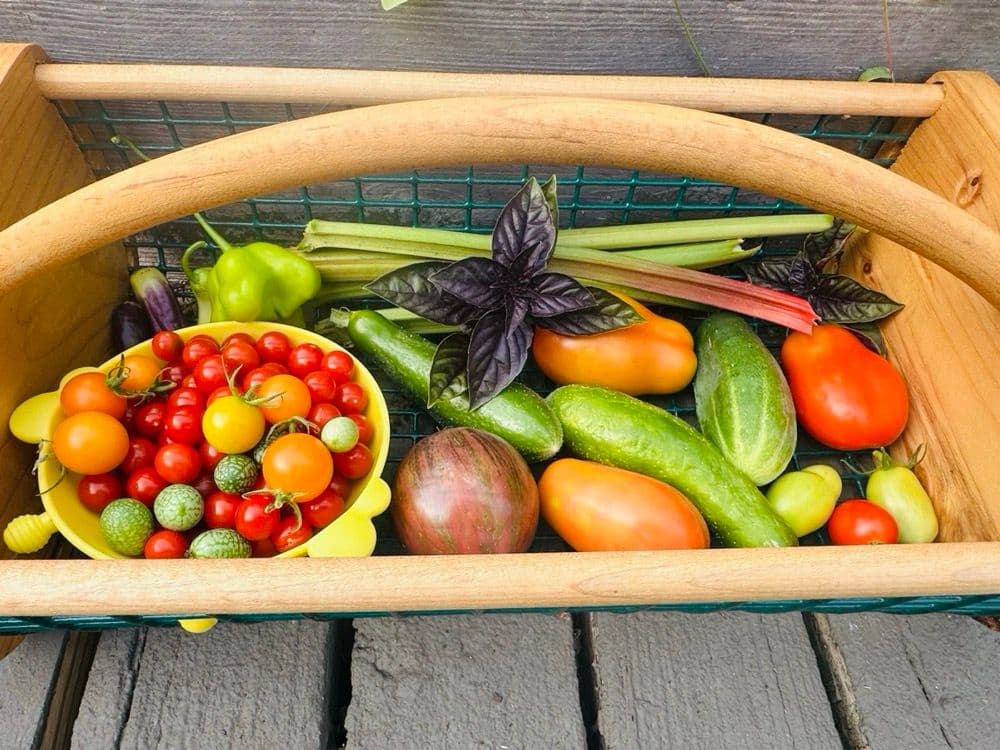
the proof is in the harvest
This basket is the result of companion planting done right - tomatoes, peppers, cucumbers, and basil all growing together and thriving. The right pairings don't just coexist, they help each other produce more.
Keep these apart - trust me, I learned some of these the hard way.
Both attract corn earworm/tomato fruitworm (same pest). Planting together increases pest pressure.
Onions and alliums stunt bean growth through allelopathic compounds.
Potatoes increase cucumber susceptibility to blight. Both are heavy feeders competing for nutrients.
Same family (Solanaceae), share diseases including blight. Never plant together or in rotation.
Onions and other alliums stunt the growth of peas and beans through allelopathic compounds. Keep all your alliums (onions, garlic, shallots) away from your legumes.
Like onions, garlic releases compounds that inhibit bean growth. All alliums (garlic, onions, leeks, shallots) should be kept away from all legumes (beans, peas).
Fennel releases substances from its roots that inhibit the growth of most nearby plants, including tomatoes. It is allelopathic, give it its own container or plant it well away from your vegetable garden.
Fennel inhibits bean growth through allelopathic root compounds. Keep fennel isolated from your main vegetable garden, it does not play well with most plants.
Mint is extremely aggressive and will crowd out parsley if planted in the same bed or container. Always grow mint in its own pot, it will take over anything it is planted with.
Fennel stunts pepper growth. Its allelopathic root secretions affect most members of the nightshade family. Plant fennel in its own isolated container or separate bed.
growing together is always better