Zucchini + Corn
Part of Three Sisters planting. Squash leaves shade soil and deter weeds.
Beneficial
tested in my own garden, not just pulled from a chart
I've tested a lot of companion planting combos over the years. Some are game-changers, some are honestly just garden myths. Here's what I've found actually makes a difference - especially in containers and raised beds.
These pairings have made a real difference in my garden.
Part of Three Sisters planting. Squash leaves shade soil and deter weeds.
Carrots loosen soil around tomato roots. Tomatoes provide shade for carrots in summer.
Dill attracts beneficial insects that prey on cucumber pests.
Classic Three Sisters: beans fix nitrogen, corn provides support for climbing beans.
Radishes mark rows and break up soil. Harvest radishes before lettuce needs the space.
Onion scent deters carrot fly. Carrots deter onion fly.
Basil repels aphids and spider mites from pepper plants.
Beans fix nitrogen which feeds heavy-feeding eggplant.
Peas fix nitrogen and provide light shade for heat-sensitive spinach.
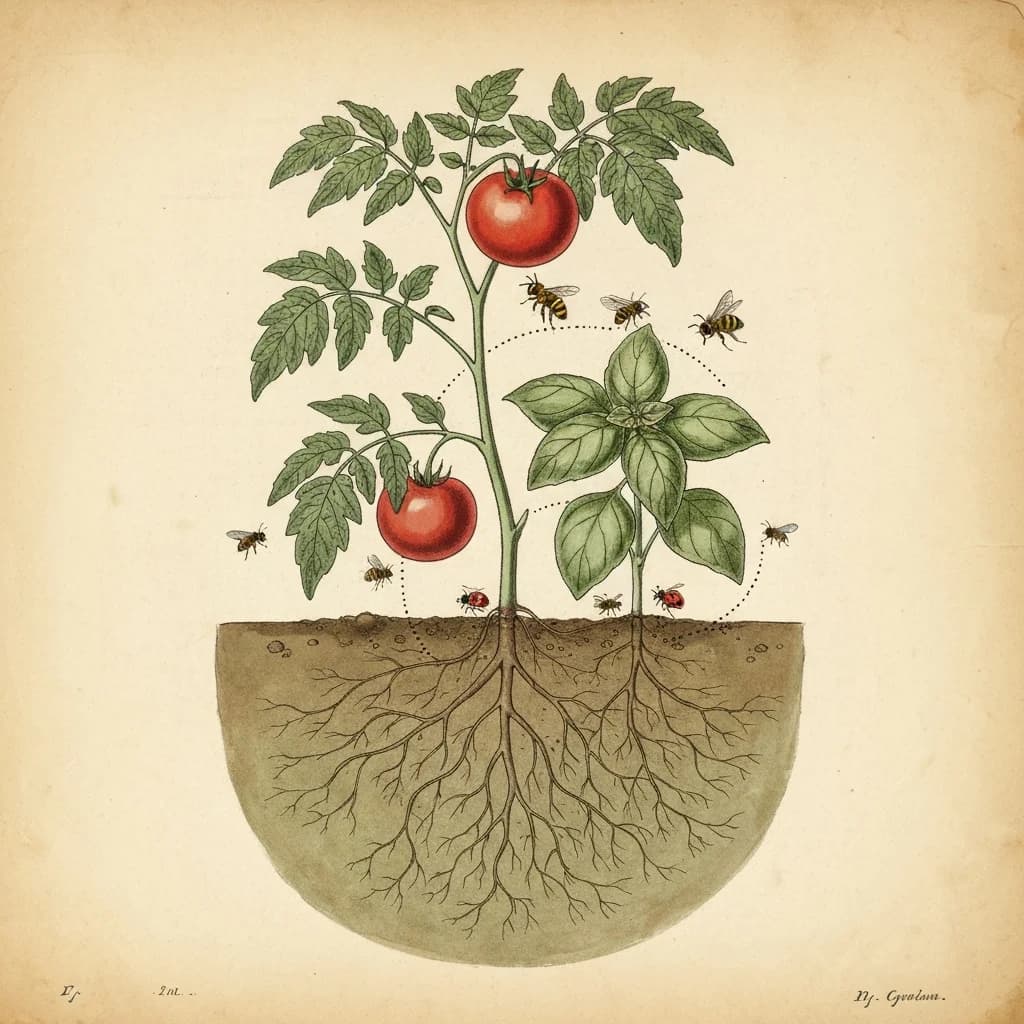
Basil repels aphids, whiteflies, and tomato hornworms. May improve tomato flavor.
Just like with bell peppers, basil repels aphids and spider mites from hot pepper plants. They share the same growing conditions, full sun and warm soil.
Dill attracts parasitic wasps and other beneficial insects that prey on cabbage worms and aphids, two of kale's biggest pest problems.
Borage attracts pollinators that improve strawberry fruit set and some gardeners report it improves strawberry flavor. Borage also attracts beneficial insects that prey on strawberry pests.
Nasturtiums act as a trap crop, drawing aphids away from cucumbers. They also attract predatory insects and add beautiful edible flowers to your garden.
Garlic planted around rose bushes helps repel aphids, Japanese beetles, and other rose pests. The strong sulfur compounds in garlic act as a natural pest deterrent.
French marigolds suppress root-knot nematodes in the soil and may repel whiteflies from tomatoes. They also attract hoverflies, whose larvae eat aphids.
Young dill repels aphids and attracts beneficial insects near tomatoes. However, mature dill can inhibit tomato growth, so harvest dill regularly or pull it before it gets large and goes to seed.
Marigolds help deter flea beetles, which are one of the most common and damaging pests for eggplant. They also attract beneficial insects to the area.
Peas fix nitrogen in the soil, which benefits carrots planted nearby. Carrots' light feathery foliage does not compete with peas for light. Both are cool-season crops with similar timing.
Spinach grows as a living mulch under strawberry plants, keeping soil cool and moist. They share similar watering needs and spinach is harvested before strawberries need the space.
Basil repels aphids, spider mites, and whiteflies from eggplant. They both love full sun and warm conditions, making them natural garden bed partners.
Sunflower stalks can serve as natural trellises for cucumber vines, and their large blooms attract pollinators that improve cucumber fruit set. Plant sunflowers first and let them establish before training cucumbers up the stalks.
Nasturtiums serve as a trap crop, luring squash bugs and aphids away from zucchini plants. Their bright flowers also attract pollinators that improve squash fruit set.
Fast-growing radishes break up soil crust and mark rows, making it easier for slower-germinating spinach to establish. Radishes are harvested well before spinach needs the room.
Borage attracts pollinators and beneficial insects to tomato plants. Some gardeners also report it deters tomato hornworms. Its deep taproot can bring up minerals from lower soil layers.
the proof is in the harvest
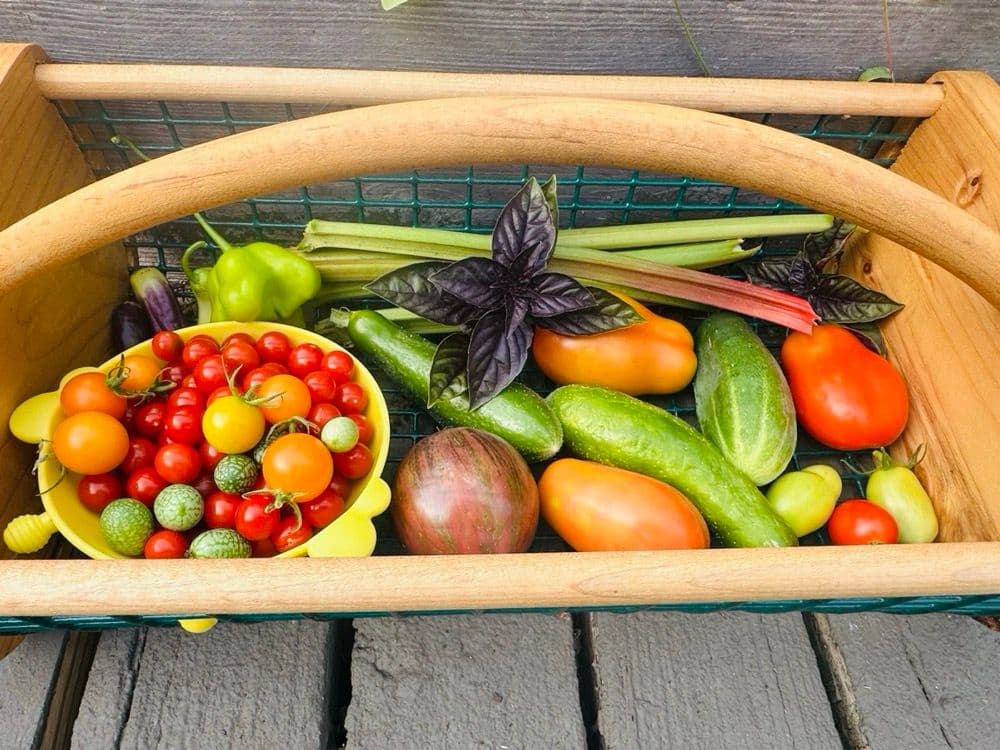
This basket is the result of companion planting done right - tomatoes, peppers, cucumbers, and basil all growing together and thriving. The right pairings don't just coexist, they help each other produce more.
Keep these apart - trust me, I learned some of these the hard way.
Both attract corn earworm/tomato fruitworm (same pest). Planting together increases pest pressure.
Onions and alliums stunt bean growth through allelopathic compounds.
Potatoes increase cucumber susceptibility to blight. Both are heavy feeders competing for nutrients.
Same family (Solanaceae), share diseases including blight. Never plant together or in rotation.
Same family (Apiaceae), can cross-pollinate and attract the same pests (carrot fly).
Onions and other alliums stunt the growth of peas and beans through allelopathic compounds. Keep all your alliums (onions, garlic, shallots) away from your legumes.
Like onions, garlic releases compounds that inhibit bean growth. All alliums (garlic, onions, leeks, shallots) should be kept away from all legumes (beans, peas).
Fennel releases substances from its roots that inhibit the growth of most nearby plants, including tomatoes. It is allelopathic, give it its own container or plant it well away from your vegetable garden.
Fennel inhibits bean growth through allelopathic root compounds. Keep fennel isolated from your main vegetable garden, it does not play well with most plants.
Mint is extremely aggressive and will crowd out parsley if planted in the same bed or container. Always grow mint in its own pot, it will take over anything it is planted with.
Fennel stunts pepper growth. Its allelopathic root secretions affect most members of the nightshade family. Plant fennel in its own isolated container or separate bed.
growing together is always better